


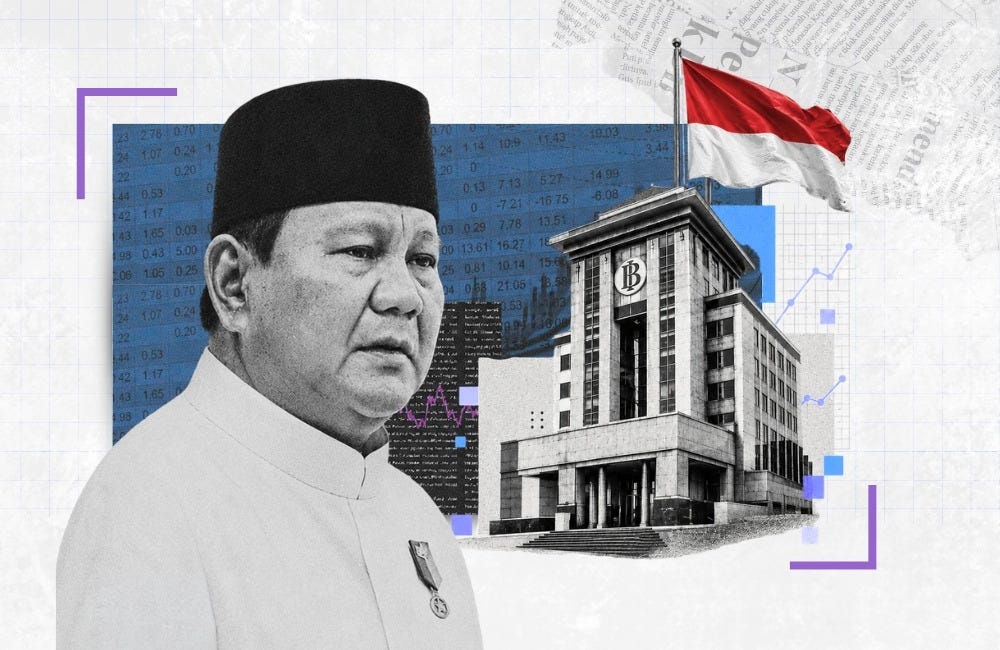
Just as investors thought that the Indonesian financial market would not see another volatility as the stock market surged and currency stabilized in July 2026, the Governor of Bank Indonesia (BI) resigned this week, fuelling another round of policy uncertainty.
The abrupt resignation of Perry Warjiyo due to “personal reason” came as a shock, especially as he still had two years left in his tenure. The Ad interim Governor of Bank Indonesia is now Destry Damayanti, who was previously the central bank’s Senior Deputy Governor.
What is even more surprising is that the Indonesian Corruption Eradication Commission (KPK) stated that it might be open to calling the former BI Governor as a witness in an alleged corruption case involving corporate social responsibility funds between BI and Financial Services Authority (OJK).
Nevertheless, the next step is clear: President Prabowo must nominate a new permanent Governor of Bank Indonesia, which will then need to be approved by the House of Representatives (DPR).
There are many potential candidates currently circulating in the news, but one name that stands out is the President’s own nephew, Thomas Djiwandono, who was appointed as the Deputy Governor of Bank Indonesia in February 2026 without prior monetary experience.
From the market’s perspective, if Thomas is appointed, it would signal a significant deterioration in central bank independence and credibility, which could lead to further distrust toward the Indonesian government, already seen as centralizing power under President Prabowo.
Such an appointment would be the least preferred by investors and would likely lead to another selloff in the equity market and capital outflows from Indonesia, where Rupiah has depreciated past 18,000 this week.