



Rupiah has reached a record low of 17,700/USD (-6% YTD) as the currency faces intensifying selling pressure driven by both global and country-specific factors, including:
Energy shock (oil prices >$100/barrel), MSCI index rebalancing that reduces country weight to around 0.5% (from 0.7%), surging import costs (oil, heavy equipment), and fiscal capacity constraints amid a spending surge (implied FY26 budget deficit/GDP >3%).
Abrupt policy changes have amplified the selloff as well, such as decreasing production quotas (nickel & coal), increasing royalty rates for metal mining (now delayed), weakening rule of law, and restricting private-sector growth through bureaucracy.
Poor communication from policymakers across fiscal and monetary institutions has also created anxiety, as they appear to ignore the risks and downplay the need for proactive approaches to prevent a potential economic downturn.
The Indonesian President also announced a shocking new regulation this week to centralize export processes of strategic sectors such as CPO, coal and ferro-alloys through Danantara that will be fully implemented by next year.
Ultimately, the recent currency weakness seems to be primarily driven by uncertain fiscal policy direction and a lack of credibility from President Prabowo’s administration, which are driving the outflows from Indonesia.
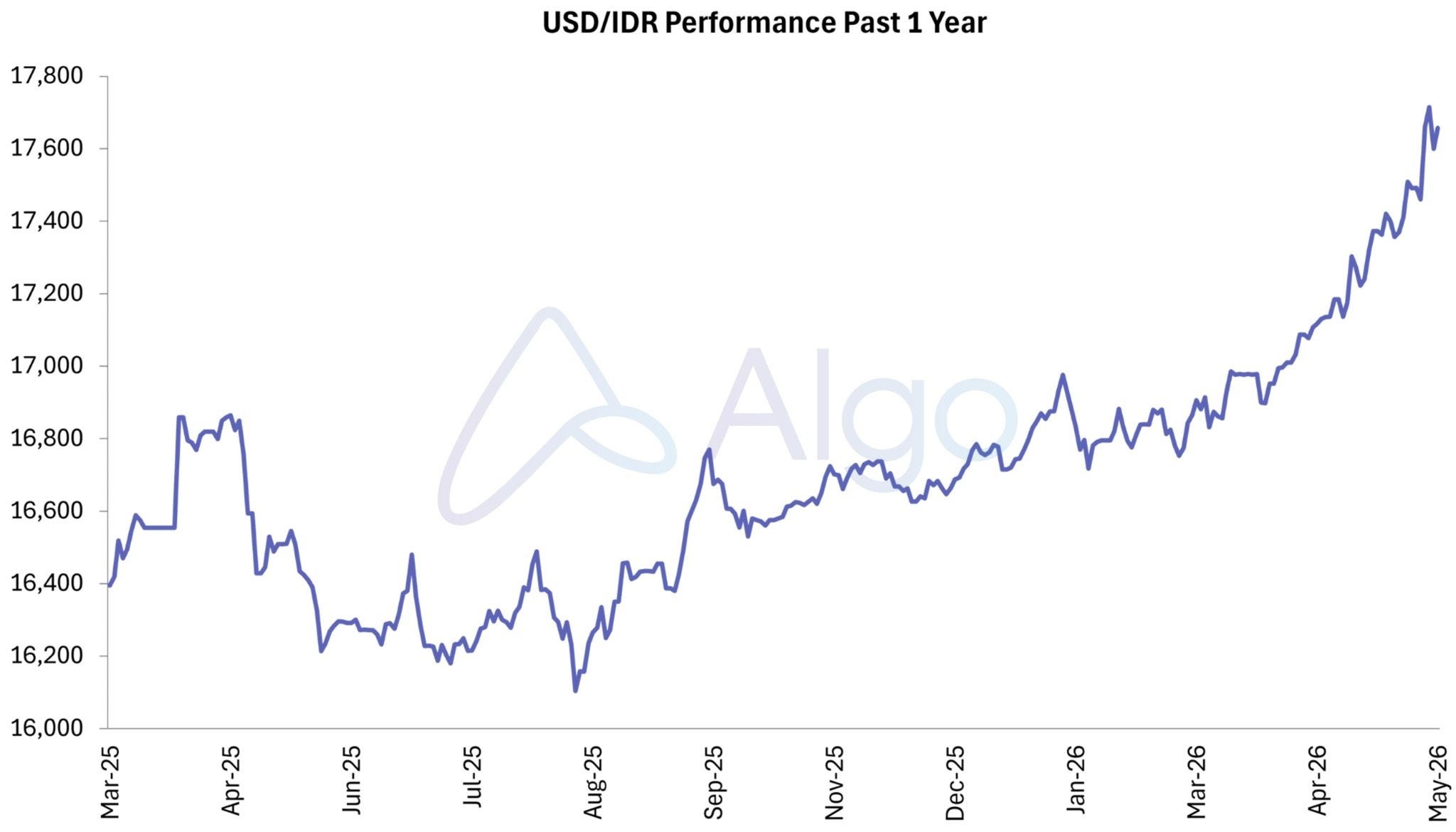
Nevertheless, the Indonesian central bank has exhausted pretty much all its ammunition to defend the currency by issuing Bank Indonesia Rupiah Securities (SRBI) and burning through foreign exchange reserves.
The last “monetary bullet” was fired yesterday with a larger-than-expected interest rate hike of 50bps to 5.25%, which came above the majority of estimates. USD/IDR fell to 17,600 on the news, but it is now trading back at around 17,700.
Accordingly, the outflows are mostly driven by fiscal uncertainty and distrust in the central government, so no matter how much effort is made from a monetary policy perspective, it will not stop the depreciation of the Rupiah.
For the Rupiah to strengthen, the central government must reverse its fiscal path, but this is very unlikely for now. One external factor that could help is de-escalation in the Middle East. Yet, the damage to the oil market is already done, and high oil prices are likely here to stay.
Fun fact: The combined net foreign inflows from Indonesian equity and bond markets (SRBI + SBN) reached IDR 25 trillion this year, suggesting that most of the capital flight come from domestic.
Will they care about an interest rate increase? Unlikely