


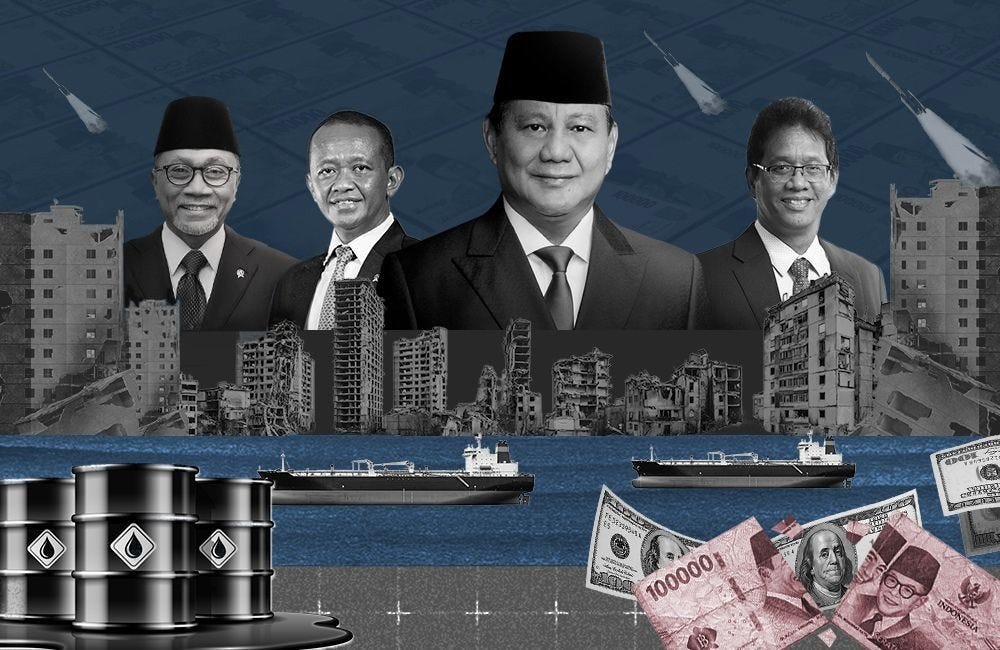
One month after the US and Israel launched war on Iran, the global economy is now facing an energy shock driven by severe supply-chain disruptions and rising oil and gas prices.
The head of the International Energy Agency warned that the current energy crisis is worse than those experienced in 1973, 1979 and 2022 combined, especially in terms of lost in production capacity.
At least 40 energy facilities in the Middle East have been physically damaged in the conflict, including 2.5 million barrels per day of oil production shut-ins, which will likely take years to rebuild.
Asia is the most impacted, as more than 80% of crude oil transported via the Strait of Hormuz mainly flows to China, India, Japan, Thailand, Singapore and South Korea.
In total, around 20% of global oil and gas production is affected. Other key commodities such as fertilizers, LNG, sulphur, aluminium and helium are also disrupted.
Meanwhile, contrary to policymakers across Asia who are preparing for worst case scenarios, the Indonesian government continues to downplay these significant downside risks.
The Indonesian Minister of Energy and Minerals states that the country is well equipped as a net energy exporter and will not face fuel shortages despite being in net deficit position.
The Minister of Finance expects oil price to average $74 versus $70 budget assumption, which he think can be absorbed through cost savings, despite forward curves implying a minimum of $85 by end of 2026.
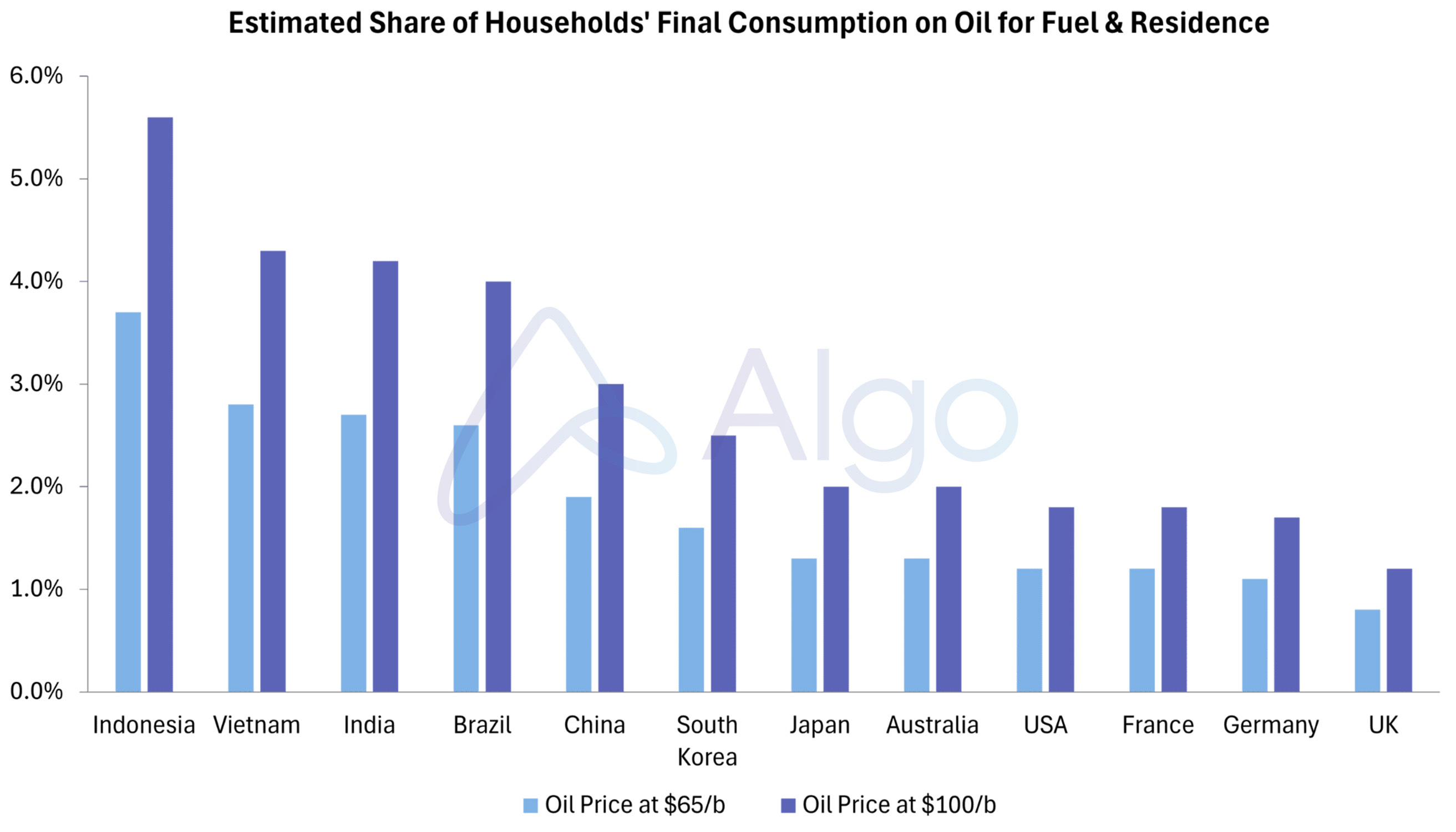
However, Indonesian households are likely to be the most affected by rising oil prices, where Bloomberg estimates that spending on oil for transportation and residential is at 5.6% of total consumption if oil prices average $100.
This figure is likely much higher for Indonesian lower-income families, which could reach more than 30% of total.
The shock is beginning to hit Indonesian industrial sectors too including petrochemical (Chandra Asri declared force majeure), nickel (75% of sulphur supply from the Middle East), airlines (rising costs from jet fuel), and agriculture (20-30% increase in pesticide prices).
Given the signs of prolonged supply-chain disruption, the lack of cohesive planning from the Indonesian government is concerning, as it creates room for ineffective and reactive policies if the situation becomes much worse.