


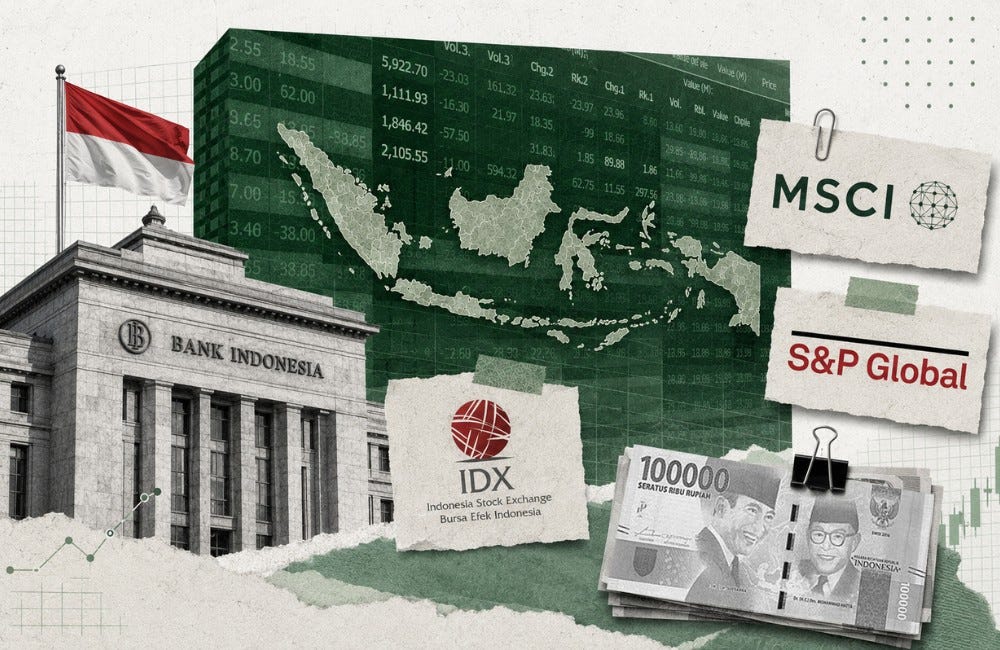
After significant selloffs in the first half of 2026, the Indonesian equity market has recovered substantially in July, with the Jakarta Composite Index (JCI) up +9.4% MoM (-29% YTD) on stabilizing currency, easing fiscal risk, and improving liquidity.
Last month, we noted a tactical opportunity following coordinated policy responses from the government, implying that 5,300 for JCI and 18,000 for USD/IDR are the levels that policymakers may not be comfortable with.
Recall the policies included hiking interest rates during an off-cycle, signaling potential stock purchases by the country’s sovereign wealth fund (Danantara) and the Social Security Agency (BPJS), and reducing unproductive fiscal spending.
Although sentiment remained muted afterward, investors are now beginning to turn more hopeful as liquidity starts to return, with net foreign inflows reaching IDR 442 billion last week.
S&P’s decision to keep Indonesia’s sovereign debt rating at investment grade with a stable outlook, alongside the updated High Shareholding Concentration (HSC) list as part of broader market reform, also helped improve sentiment.
Nevertheless, the technical setup for JCI looks supportive after the index traded sideways between 5,500 and 6,200 over the past month.
We expect JCI to breakout of this range in the near term, driven by more inflows from light positioning, a stabilizing Rupiah, and an improving earnings outlook.
Algo Research Alpha tactical opportunities: AMMN, TPIA, ANTM, INCO, BDMN, BRPT, and ENRG. Government interventionist policies remain the biggest downside risks for Indonesian equities, especially among commodity stocks.
Kelak setelah 2029...JCI akan membaik dan mulai menanjak.. jika terpilih presiden baru...