


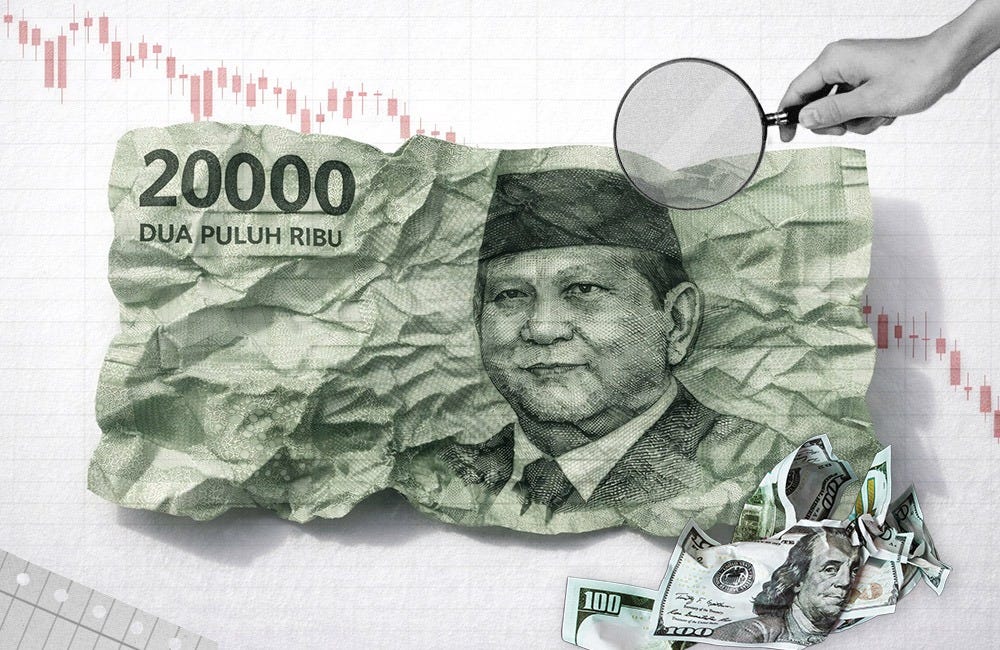
Despite outflows following downgrades on Indonesia by global institutions, Rupiah has managed to trade around 16,800 against USD, holding below the 17,000 psychological threshold largely due to central bank support.
However, among comparable peers in Asia, Rupiah is the worst performing currency against USD this year, depreciating -1.3% and down -2.9% over the past one year. It has also weakened by -46% over the past twenty years, only better than Indian Rupee at -55%.
Inherently, there is nothing unusual about a weakening currency, especially for a net exporting country, as long as it is supported by structural growth engines that increase national income to offset the loss in currency value.
The issue with Indonesia is the absence of such structural foundations, as policymakers tend to focus on cyclical growth that typically lasts only 5 years or within the duration of the sitting President.
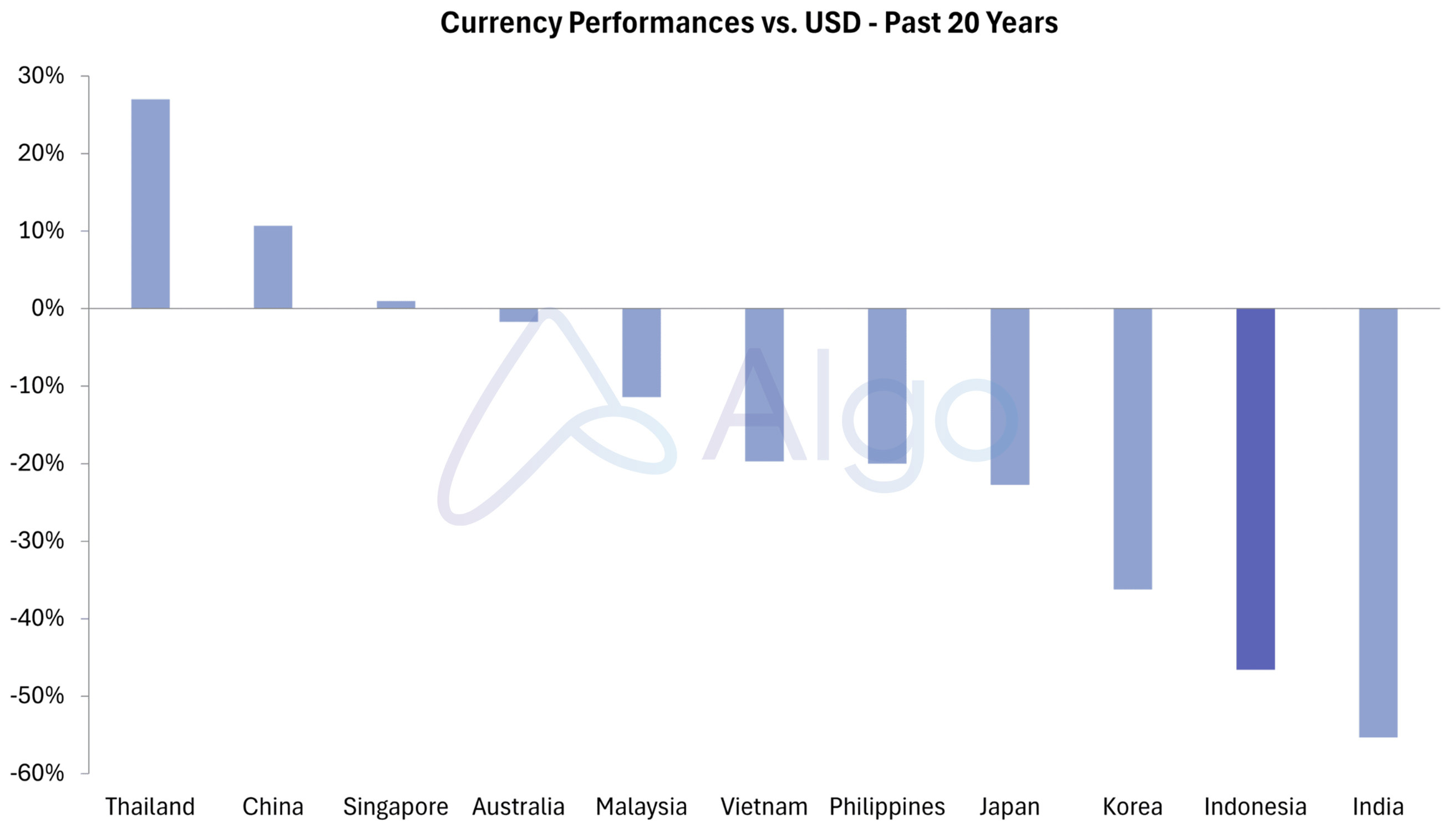
If a currency reflects economic strength and credibility, Rupiah’s persistent weakness suggests that Indonesia is perceived as relatively less attractive compared to its regional peers.
Policy developments that are seen as excessively interventionist, yet without concrete long-term growth benefits are spooking investors such as potential takeovers of mining licenses and land seizures under regulatory pretexts.
Concerns on policy credibility have intensified as well, particularly after the President’s nephew was appointed as the Deputy Governor of Bank Indonesia despite having no prior monetary experience. This raises questions about central bank independence.
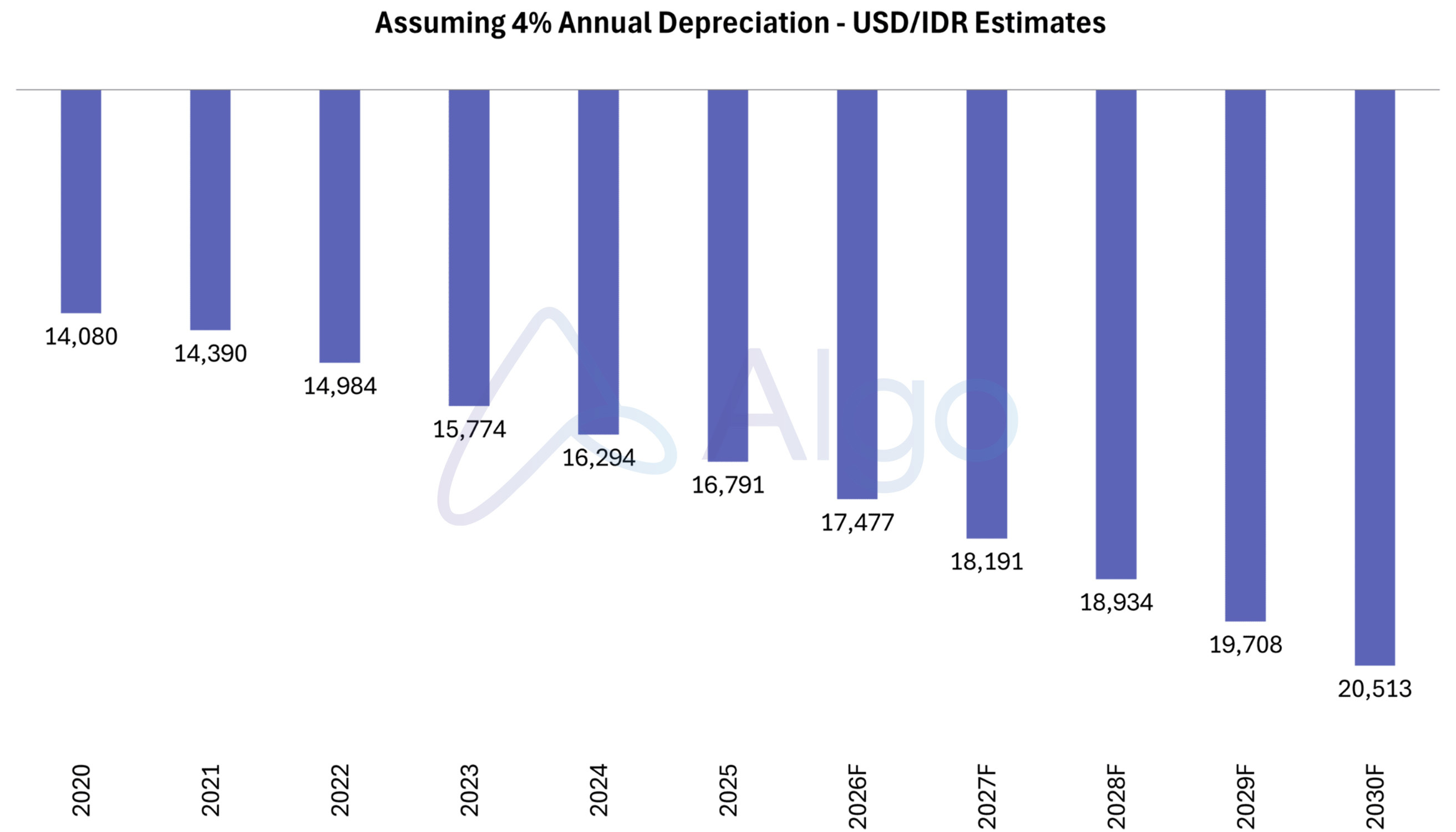
Consequently, assuming Rupiah depreciates by -4% annually, in line with the past two years average, it could approach 20,000 against USD by 2029, coinciding with the end of President Prabowo’s first term.
All these factors are pushing financial outflows from the country, creating consistent pressure to defend the currency while trade and investment are leaning towards less exports (i.e. domestication) and more imports (i.e. downstreaming).